
Wednesday, May 29, 2013
Citizen Kane: A Portrait of Sucess?

True Grit
Looking at the characters in the Coen brothers’ “True Grit,” viewers can see some similarities as well as differences in their roles while in comparison to traditional Western film characters. In “True Grit”, the hero is actually the heroine in the form of Maddie, who arguably shares the main role with the man she hires to kill her father’s murderer, the “Rooster” Cogburn. Throughout the film it would seem Maddie is constantly at odds with her environment, both physically and mentally. Compared to John Ford’s “Stagecoach”, where the roles of women were clearly defined (the harlot or the saint), Maddie struggles with reconciling her intelligence, which is far more mature than her age, and her sexuality—or lack thereof. As is frequently noted, Maddie is not considered an attractive girl and her age is often a topic of concern. Inconsistent with the traditional heroine role, Maddie’s innocence and clumsiness deny her the persona that would otherwise establish her as the femme fatale in this film.
The role of Cogburn as hero and antihero is a duality that is emphasized throughout True Grit. True to the nature of the hero, Cogburn’s role as protector is emphasized as his relationship with Maddie grows and develops. Also true to the traditional role of the hero, Cogburn is considered a lone pioneer, even up until the end of the film, when he dies while travelling with a Wild West Show, a tribute to the Old West. What is unconventional concerning the character of Cogburn relates mostly to his physical flaws which are inconsistent with traditional Western heroes. The character of Ringo, for example, in Stagecoach is handsome; he is a lone rogue that stands as a sort of moral compass throughout the film—a role not readily present in Cogburn. Though we know Cogburn to be a good man, his character is “tainted” by his incessant drinking and “quick-draw” attitude. At the beginning it is clear Cogburn is considered to be a relic of the Old West, someone who was once great, but who has since lost his purpose. It is clear in the times Cogburn had to draw his gun, that he was never guaranteed to make his target as is represented when he accidentally shoots LeBeouf and when he is mocked for having one eye and challenged to shoot a whisky bottle in the air.
LeBeouf is also an interesting character, seemingly portraying the ideal hero. Unfortunately LeBeouf’s self righteous attitude and selfish tendencies separate him from the traditional cowboy.
Aside from the characters in “True Grit”, the narrative structure strays from the traditional Western narrative in the fact that our antagonist, Tom Chaney, is not as daunting or dangerous as would have been made out in the beginning. In fact, one would argue that the boss of the Pepper gang, Ned, is more of a villain than the character of Tom. While the characters of Dallas and Ringo ultimately ride off into the sunset at the conclusion of the film, Maddie and Cogburn go their separate ways and never reunite. Additionally, Maddie never submits to a romantic relationship, stating she never had time for such things, but alludes to her time with Cogburn as “lively”—though we as the viewer know his role was more fatherly than romantic. In a way, Maddie retains the attitude she has always had as a child, yet her outlook on life seems to resemble that of Cogburn’s in her description of herself as a grouchy old maid.
Brilliantly adapted, True Grit dually captures the epic beauty of a traditional Western, yet renders the tale in such a way that takes it further, and deeper, through the use of unconventional characters and storyline.
True Grit
True Grit re-inscribes our
expectations of the western hero by giving us a fourteen year old girl who goes
against everything that has come to be expected of the protagonist in a western
film. Unlike Ringo Kid, for example, Mattie is a girl who is much younger than
those around her and is anything but a soft spoken hero who we might expect to
see. Instead she is an incredibly intelligent individual who knows what she
would like to achieve, and uses her gumption to ensure that things go her way.
Unlike the typical
females seen in western films, Mattie does not do what she is told, and she is
smart enough to work things so she can have her way. In the movie Stagecoach both Dallas and Mrs. Mallory
rely on the men for help and guidance. Dallas even goes so far as to ask permission
from Doc Boone to have her happiness with Ringo.
Mattie on the other hand
only relies on the help of the men whom she chooses. She knows her limits, and
hires the help she needs with the money that she negotiated for herself and her
family. Unlike the typical woman in most westerns, she does not wait for things
to happen, or for the law to provide justice. She makes her own justice.
And it isn’t just Mattie
who breaks stereotypes. Cogburn and Laboeuf both break convention with their
characters. Cogburn is an old, drunk, martial with an easy trigger finger; and
Laboeuf is a Texan Ranger who’s tracking skills are questionable, and whose
stories may or may not be true. Unlike the typical western males, these two are
flawed, and are both unsympathetic at times. The viewer doesn’t have the
knowledge that they may have a past, but are on the whole good guys. Instead
they are both men with a record who have some good in them, but also have bad.
True Grit is a darker version of a western with takes on characters
not typically seen in movies like Stagecoach.
It takes the genera of the western film, and takes a new look at how it can be
told, portraying the characters in a manner which is much closer to the reality
of human nature.
A Glimpsed at "True Grit"
The shocking part of the film is Mattie Ross. She’s a challenge because she defies the role of a woman. Mattie is out of the ordinary
because she's only 14 years old but she has the will and courage to avenge her
father's death. Typically, we expect a male to do her part but she's an atypical female who is brave enough to go out of her way to catch
her father's murderer. This also displays a atypical western female character because usually females stay at home, take care of the children, and cook but Mattie is the opposite. She is more like a fatherly figure in her household. The feminist character that Mattie plays is being challenged because it's rear to see women do the 'hunting'. It also makes her a powerful figure in her society because it shows other women that they have the capability of doing more manly things than they are expected in our society.


Secondly, Rooster Cogburn is a typical
western hero in the movie. He goes on an adventure in hopes of finding Mattie’s
father’s murderer like a hero does. He took it on a personal level where Mattie became
important in his journey and helped her find Chaney to bring justice to Mattie's family. He is the main hero in this film because he possessed most of the characteristics of a hero. He is out to save the world from the bad guys and he brought Mattie justice by helping her find her father's killer. He displayed a fatherly figure to Mattie. And to all the women in society, he shows that women are to be treated with respect, fairness, and equality.


Last is LeBoeuf. He's also another hero of True Grit because he
helped Mattie find Chaney. He also protected her along the way. He served as a second hand hero when Cogburn wasn't there to protect Mattie from the anti-heroes. As a typical Texas ranger, he was doing his job to find the bad guys. He is on the good side of things rather than running away from the problems of society.


In comparison to Stagecoach,
True Grit definitely has similarities in terms of how Western movies should
be portrayed, especially the characters. They have the hero, anti-heroes
(the 4 cowboys inTrue Grit), and the conflicting situations among characters. The 'Western' genre of True Grit and Stagecoach both displayed a problem in society. They have the stars of the movie who is seeking to find the truth and the heroes who will fulfill the truth.
True Grit 2010: Turning The Western On Its Head
In most Hollywood westerns,
the classic image of the American cowboy has come to embody values of freedom,
power, and bravery. The cowboy is someone who can expertly mount a horse,
handle a gun with precision, and handle anything the wilderness puts before him.
In the Coens' film, True Grit, we see several cowboys who defy these
Hollywood expectations. And, perhaps more significantly, we see a female
character that challenges our expectations for women's roles in the
western. Discuss how the characters in this film re-inscribe and
challenge our expectations for the western hero, male or female. In what
other ways do you see this film defying the genre's conventions? How does
the film compare to John Ford's classic western, Stagecoach?
Western
films often have very set shoes for male and female characters to fill.
However, the Coens’ True Grit has a tendency to flip this typicality on its
head with many of its characters. Each character has a trait that helps him/her
break the stereotypes. The movie itself breaks some traditional elements to the
Western as well, such as, the Native Americans not being portrayed as an inherently
evil force, but still holds on to some of those tried and true pieces including
the revenge plot, and the long shots of the scenery.
Rooster Cogburn meets some of the
expectations for your typical cowboy in a Western film. He slightly defies the upstanding
lawman expectation due to his fondness for whiskey, because often in a Western
we do not see a character on the protagonist side of things as having so many
rough edges. The only time drunkenness and a lawman are put together is when
the character is set up to be a crooked officer of justice. We also see another
atypical trait during his demonstration of his shooting ability. It’s also very
interesting that we do not see how poor of a shot he is until he and Mattie are
further into the journey, and it comes as a surprise that the great Marshal
Cogburn is so deficient with a gun.
However, he does demonstrate the wisdom and knowledge of the wilderness
that is typical of the Western male hero. We also see how he still upholds
justice, as we expect him to due to his role when he threatens to shoot Lebeouf
for switching Mattie. In this way, Cogburn and Ringo from Stagecoach are
similar because they still uphold the belief that a lady shall be treated like
a lady, and Mattie has proven herself not to be a child anymore.
Lebouf is very much so a non-standard
cowboy. Even the way he is dressed is too hokey for the normal cowboy in a Western
film. He matches from head to toe, his facial hair is neatly trimmed, contrast
this with Ringo, Buck and Curly from Stagecoach, who looked very
“average Joe”, with worn hats, poorly shaven faces, etc. Granted, this could be
because he is a Texas Ranger, and it’s his uniform, but this only entices the
audience’s sympathies with Cogburn in his relentless goading, based on our
expectations of the rough and tumble cowboy. Lebouf talks about all of his
Texas Ranger customs for being in the wilderness and pursuing a criminal, but
Cogburn dismisses almost every thought Lebouf offers. Cogburn’s age and
reputation make him seem more credible. Lebouf comes across as very green and
naïve, which is odd since he isn’t exactly a young man. We would expect such
naiveté and cockiness from a teenage boy in a Western.
Mattie is the most surprising character
of the film in regards to the way she defies the stereotypical role of a female
character in a Western. Most women in Westerns are either portrayed as fragile,
delicate and submissive, that is when they are not prostitutes, in which case
they are often portrayed as hard-hearted, or their role is entirely based on
their promiscuity. Mattie is, in contrast, a hardheaded and passionate young
lady. She is not at all intimidated by any men she encounters, all of which
attempt to hold her in the typical role of a woman of the time period, but in
fact this fuels her to fight more passionately for her causes. She also knows
how to negotiate, perform business, and is clearly well educated. Often a well-educated
woman of this time would be portrayed as an aristocratic genteel woman, such as
Lucy Mallory in Stagecoach, who would not be involved in business
affairs. A farm wife, probably is not as well read, but may know how business
works, however it’s really not often that we see a woman performing business in
a Western, especially one who is only fourteen years of age. Mattie having both
the education and the “street smarts”, if you will, is what completes her
character as being the antithesis of a typical female character in a Western
film. She also defies the expectations we have for a child with her knowledge
and lack of fear and intimidation. She has everything she needs to reason her
way through the world, she still possesses the child-like naiveté to speak her
mind, and the passion for what is right, which combined make her a powerful and
atypical female character.
From Classic to Coen: The New True Grit
In a typical Western, female
characters are often times the schoolmarm or most likely a woman soiled by the
profession of prostitution. In the Coen Brother’s True Grit adaptation this is certainly not the case. The film
follows vivacious, brave, fourteen year old Mattie Ross. She is a young girl
fraught with strife over her father’s death and in pursuit of the slow witted
Tom Chaney, her father’s murderer. Unlike typical Westerns True Grit empowers the only female character in the film. She
sports a consistent hair-do of braided pigtails and dons her father’s jacket
and hat, all of which are oversized. She is witty, intelligent and outspoken
often times calling the older, hard boiled Rooster Cogburn her employee,
insinuating he is her subordinate. Not only is it rare to see a female character
playing such a prominent role in a Western but Mattie’s age also sets her
apart. Rarely are children featured in Westerns, let alone portrayed as the heroes.
Though Cogburn plays the tough, gun-slinging cowboy the film’s protagonist
title clearly belongs to Mattie.
Additionally, this updated Western
moves away from the typical wide screen angles often associated with genre.
Close-ups are prominent, along with low angle shots and less emphasis is put on
the surrounding landscape in which the film takes place, though the Coen
Brothers sprinkle them throughout. The film does resort back to the typical
Western motifs often associated with the conventions of Westerns. There are
multiple gunfights, numerous cowboy hats, and Cogburn adheres to a code all his
own—a trademark of the cowboys featured in Westerns. This updated film takes a
fresh look at an old genre and reminds audiences why Westerns still sell out at
the box office.
A Much Darker Wild West: True Grit (2010)
True Grit (2010), defies expectations of
a Western genre film. It breaks even further from genre expectations than its
1969 predecessor. The classic True Grit
(1969) broke away from Western conventions as well, but cast John Wayne, a star
synonymous with Westerns, which leads viewers to quickly deem that version similar
to western genre films. True Grit
(2010), directed by the Coen Brothers, deviates even further from the western
genre than the John Wayne version, despite the fact that the premise of the
film is the same as the 1969 classic. True
Grit (2010) was directed by the Coen Brothers, and this in itself leads the
audience to expect a different type of film. The Coen Brothers are famous for
directing films such as O’ Brother Where
Art Thou, The Big Lebowski, No Country for Old Men, and Fargo. The style of these films fills
audiences with a preconceived notion as to what the style of True Grit (2010) will be.
The Coen Brothers, true to their style, deliver a much darker True Grit (2010) than the John Wayne
classic. True Grit (2010) is darker
not only thematically, but the overall look of the film is darker as well. The
setting of True Grit is one of the
main deviations from the classic Western genre. In a traditional Western, the
setting is the desert of the “Wild West.” As we have read, John Ford, a
typified Western director, preferred to shoot his films in Monument Valley, to
capture a desert landscape.
The setting of Stagecoach,
for instance, is said to take place in Arizona and New Mexico. True Grit, however, is meant to take
place in Arkansas into Oklahoma. The setting of True Grit is in the woods, rather than the open desert. True Grit (2010) takes place primarily
in the middle of winter, and the look of the film is dark and bleak. This differs
from the 1969 version, which had shots that were very sunny, and had a feel of
spring. The Coen Brothers film has a much darker ending than the classic
version as well. In the 1969 version, LaBoef is inevitably killed by Tom Chaney
smashing the rock over his head, but first, aids Rooster and Mattie out of the
rattlesnake filled hole. Rooster stays with Mattie through her long recovery. The
audience is left with the final scene of Mattie (still fourteen) showing
Rooster her family’s cemetery plot, and Rooster telling her to come visit him. The
2010 version obviously leaves the audience in a much darker place. We are 25
years in the future, and she has lost her arm, and is traveling to see Rooster.
(The last time she saw him was when he delivered her to the doctor.) When she
finally reaches her destination, she finds that Cogburn is already dead. She
then has his body transferred to her family plot, and this is the final scene
that the audience is left with.
Mattie, herself, is a deviation from the traditional Western. It was not
typical for female characters to have such a strong presence in the Western
genre. Mattie is an assertive and cunning young woman. She takes the initiative
to take care of all of her father’s affairs, and to pursue his killer herself.
Mattie in the 2010 version has an even stronger presence in the film than the
1969 character version. Mattie in 1969, was given a short “tomboy” haircut,
while the 2010 version maintained two long braids that appear to give her more
of a feminine look. This could reveal that a 2010 audience may have been more
willing to accept a strong female character who maintained her feminine
appearance, rather than have a female lead who appeared to be attempting to be
more masculine. In other words, the female lead in the 2010 version maintained
her strength in her own right, and the 1969 version’s female lead may have been
viewed as drawing strength from her attempt to emulate her male counterparts.
Another difference of both True
Grit films to the Western genre is the character of Reuben “Rooster”
Cogburn. In typical Western genre films, the protagonist is a cowboy who
typifies the traditions of the “Wild West.” The traditional cowboy is governed by
a higher morality, and represents the law. John Wayne, as Ringo Kid, in Stagecoach is an example of this typical
cowboy, hero character. He believes in justice, always makes his shot, and even
sees the good in a former prostitute. Rooster Cogburn, in True Grit, is not this typical character. Cogburn can be viewed as
an anti-hero. He is flawed and certainly does not always make his shot. Cogburn
is a drunk, and his drinking causes problems throughout the film. Cogburn, even
ends up shooting LaBoeuf in a shoot-out that took place while Cogburn was
trying to save LaBoeuf. Rooster is a gruff character, and appears to only be in
business with Mattie for the money. However, the viewer ends up sympathizing
with Cogburn, roots for him as he is running Mattie to the doctor, and we are
saddened in the end when we find out he has died before Mattie is able to reach
him. Though, it would make sense for Cogburn to be a sort of anti-hero, because
the true hero of the film is Mattie, herself. She is the one who ends up
getting her own justice, when she delivers the final shot to Chaney, which
kills him.
Challenging the Genre: The Coen Brothers' True Grit
The Coen brothers
challenged everything their audience knew about a typical western. The biggest
challenge of the typical Western we see in this movie is the hero of the story.
It is not often we see the protagonist of a Western be a child, especially not a
young woman. Women, especially not teenage girls, were not supposed to be
riding through the wilderness with a couple of men in search of a wanted
criminal.

Most of what we know
about the Western was that is centralized around a conflict of civilization
versus nature; a story about how the lead characters are trying to settle the
Wild West. In True Grit, there is no settling to be done. It is simply about a
crew in search of a murder. They want to take him to the authorities so he can
be charged for his crimes.
Stagecoach
was everything that I imagined a Western should be. The good guy gets the girl
and they ride off into the sunset, the bad guy gets caught and taken to jail,
and everyone else goes about life as it should be. Like Stagecoach, True Grit had
a “love story”, but not in the same sense. The audience is happy to see that
Rooster Cogburn cares about someone other than himself in all he does for
Mattie Ross.


I will admit, I wanted a happy ending, I wanted
Rooster to be at the circus he invited grown up Mattie to meet him at, and I wanted
them to spend the rest of their days together, he could be the father she lost.
But unlike every Western I have ever seen, True
Grit ended on a sad note.
True Grit
In the Coen brothers movie "True Grit" they defy every expectation society has for heroes of a western movie. One of our main characters Mattie Ross is a 14 year old girl. She is taking care of her family after her father has died and is acting as an adult. In society today a 14 year old child would not take her fathers revenge and families safety upon herself. She is a smart young woman who could make her place in a town where women are normally at the home.The other main characters Rooster Cogburn is our here but comes off a a drunk and murderer. In classic westerns the hero/cowboy is a more noble, righteous man working to serve the people. Cogburn is rough around the edges. Throughout the entire movie he comes off a lazy and uncaring. The viewers tend to not like him. Then in the end he redeems himself by saving Mattie.
Comparing this movie to stagecoach there are few similarities and differences. More of the classic vs. new. This movie gives a different view then a cowboy saving a damsel and falling in love.. It's a story about friendship and revenge.
Comparing this movie to stagecoach there are few similarities and differences. More of the classic vs. new. This movie gives a different view then a cowboy saving a damsel and falling in love.. It's a story about friendship and revenge.
Monday, May 27, 2013

In most Hollywood westerns, the classic image of the American cowboy has come to embody values of freedom, power, and bravery. The cowboy is someone who can expertly mount a horse, handle a gun with precision, and handle anything the wilderness puts before him. In the Coens' film, True Grit, we see several cowboys who defy these Hollywood expectations. And, perhaps more significantly, we see a female character that challenges our expectations for women's roles in the western. Discuss how the characters in this film re-inscribe and challenge our expectations for the western hero, male or female. In what other ways do you see this film defying the genre's conventions? How does the film compare to John Ford's classic western, Stagecoach?
Sunday, May 26, 2013
Stagecoach Characterization
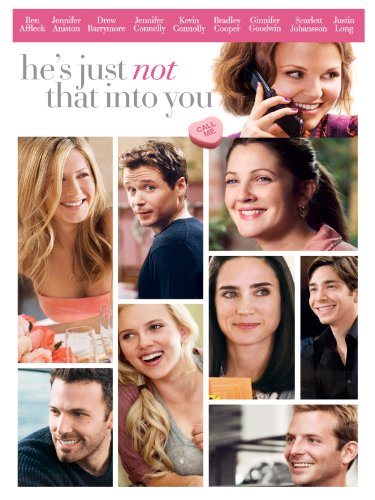
The way that John Ford developed his characters was very
different than we see in films today. Many of the movies that I have seen that
hold too many main characters tend to not be liked by people because they
confuse the different stories that the characters have. However, I have really
liked some of the films that use this technique. One of these films is He’s Just Not That Into You. I really
enjoyed this movie because of the complexity of the different characters and
how they all connected at some point in the film.
I think that Ford also does a good
job of making many of these characters round. We know the different stories
that got the characters where they were before they entered that stagecoach.
The only characters that were more flat to me were Curly and Buck because a
majority of the time, they are outside of the stagecoach so viewers don’t see
as much of them as the other characters and therefore weren’t given as much
time to develop.
As far as static and dynamic
characters go, most characters remain static. Ringo started out the movie as
being a nice and accepting guy and continues this attitude throughout his
heroic journey by accepting that Dallas is a prostitute. Mr. Hatfield doesn’t make
any significant changes along with Mr. Peacock and Mr. Gatewood because they
all are the same people at the beginning of the movie as the end. However, it
is the dynamic characters that make Ford’s movie a lot more interesting. Dallas
realizes her self worth and her ability to start a new life. Mrs. Mallory
(Lucy) grows a greater empathy for people who aren’t upper class when she
starts to tell Dallas that if she needs anything that she can come to her.
However, she interrupts this comment because she hasn’t change in a sense that
she doesn’t want to give up her status and go against the other upper class
women to help Dallas.
Characterization In Stagecoach
As a whole, the film gives us a variety of characters to
work with. I think the fact that there is variety in the characters is what
makes the many-main-character structure work. Much of the development of the characters
happens so naturally that we don’t realize at first that it’s happening so
obviously. The characters open up to each other, as travelers do when stuck in
a close space together for an extended amount of time, just like today you may
talk to the person next to you on an airplane.
The first main character we
are introduced to is Curly. He is introduced to us as a man determined to support
justice. He’s somewhat of a stock character, the lawman, who surprises us with
his heart. The audience goes from thinking he wants to arrest Ringo for the
reward, to realizing Curly thinks prison is the safest place for him, to
watching him help Ringo and Dallas ride into the sunset into their happily ever
after. We realize it isn’t that he’s the good guy, and Ringo is the bad guy,
and this is even tipped off by the fact that Ringo is an “outlaw”, yet he wears
a white hat, which is symbolic of the “good guy”.
Our next character is Buck, who is a flat character, and
also a stock character. He’s the typical big, loveable, garrulous and clueless
goofball. Next we meet Doc Boone and Dallas.
Doc Boone is also a stock character for the western genre of film, the
drunken doctor. He is a dynamic character, and he has so many facets from his intelligent
history and literature quoting side, to his “happy drunk” side, and finally
seeing him redeem himself by successfully delivering Mrs. Mallory’s baby, and
maintaining relative sobriety for the rest of the journey. It seems that when
he was given the opportunity to show his skill, he rises to the occasion and
redeems himself by the end. Dallas is developed as the Hester Prynne of Tonto.
We know for some reason everyone has exiled her, but it is never said that she
is a prostitute, but it is inferred at the end when she tells Ringo not to
follow her further in Lordsburg. I found it interesting that her attire was an
even mix of dark and light, which I think very easily could’ve been intentional
to represent she had a “bad” side, but has a good heart.
We meet
Hatfield and Mrs. Mallory in the same few moments. Hatfield is a flat
character, we follow him all through the movie as one of the untrustworthy men
of the group, and even his name carries the negative connotation of the
Hatfield’s and McCoy’s. He does seem to be well intended toward Mrs. Mallory as
he escorts her to Lordsburg. We can say he is a static character because this
never really changes. Lucy Mallory seems to be a genteel southern bell, and we
come to expect all of her behavior until after her baby is born. It is at this
point we watch her dynamic shift, because she begins to treat Dallas as a lady
and not like a dog. Peacock, the whiskey drummer is a mildly dynamic character.
I say this because we watch him through the better part of the movie fall into
his role as the short, quiet straw man, but when the baby is born; he speaks up
much more, with much more boldness than we see previously. He doesn’t play a
humongous role, other than his complimentary role for Doc Boone, and his role
as the quiet common sense of the travelers. The last character we meet in Tonto
is Gatewood, the banker. Bankers are often not considered upstanding in this
time, and the time of production also adds to the negative role of the banker.
He is also introduced with two long lingering shots, with him looking us right
in they eyes. These shots confront the audience, and let us know that he will
play some sort of role, and his expression indicates it won’t be good.
The final major character
we are introduced to is Ringo. As I mentioned before, Ringo is the “outlaw”,
but seeing his white hat and his casual demeanor amongst the law, we realize he
can’t be all that bad. He is a very
round character, and we learn a lot about him because of his openness with his
fellow travelers. He definitely has a
strong concept of justice, not only demonstrated through his drive to avenge
his father and brother’s deaths, but also in how he makes sure Dallas is still
treated like a lady, despite whatever predisposed idea all of her local
acquaintances have. He doesn’t really change; he’s very stable and static. It
reinforces the strong, stable, rugged, determined and rugged cowboy persona
John Wayne is known for embodying.
Subscribe to:
Posts (Atom)